Listen before applying anything
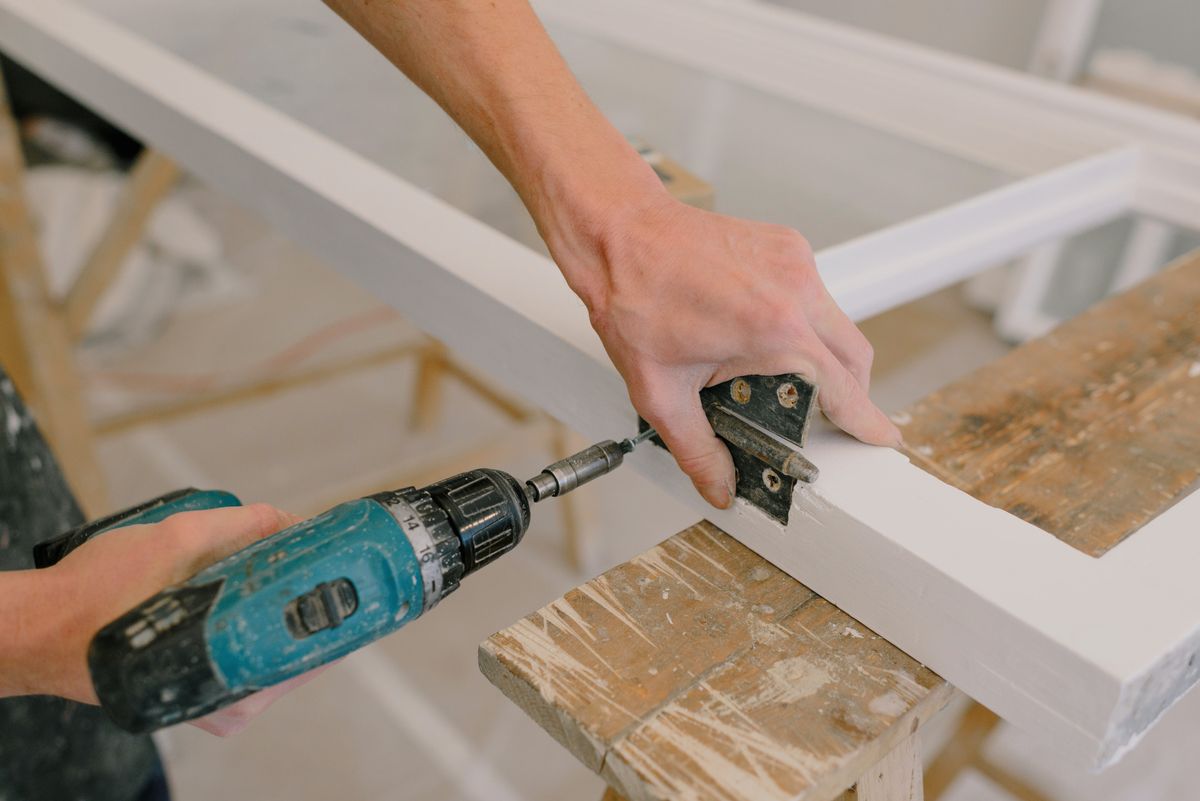
Move the door slowly while keeping hands away from the hinge gap. Try to distinguish a squeak from a latch, rubbing paint or a floor obstruction. Inspect the hinge leaves and screws without removing them. If the door drops or a hinge shifts against the frame, lubrication is not the first repair. Record the hinge type and any visible manufacturer marking so you can check the appropriate care advice before selecting a product.
Protect finishes and use very little
Choose only a lubricant compatible with the hinge and its finish. Some specialised or maintenance-free hinges have different requirements. Protect the floor and surrounding paint with an absorbent cloth, and follow the product's application and ventilation instructions. Do not blanket the hinge with spray or let liquid run down the frame. On an appropriate conventional hinge, a controlled small application at the recommended point is preferable to soaking the whole assembly.
Move, wipe and reassess
Gently operate the door several times to distribute the product, then wipe away excess before it attracts dust. Check whether the noise has changed and whether the door closes normally. Avoid removing hinge pins or adjusting the door while treating a simple squeak. If the noise returns quickly, the hinge binds or the door's weight seems poorly supported, ask for a proper assessment. Keep the lubricant securely stored and do not assume the same product is suitable for locks, plastic tracks or unrelated moving parts.
Before you call it done
- Confirm the sound comes from the hinge.
- Check lubricant compatibility with the hardware.
- Wipe excess away after gentle movement.
Know the limit. Do not alter fire-door hinges or closer hardware; specialist door assemblies require their prescribed maintenance.