Notice movement during ordinary use
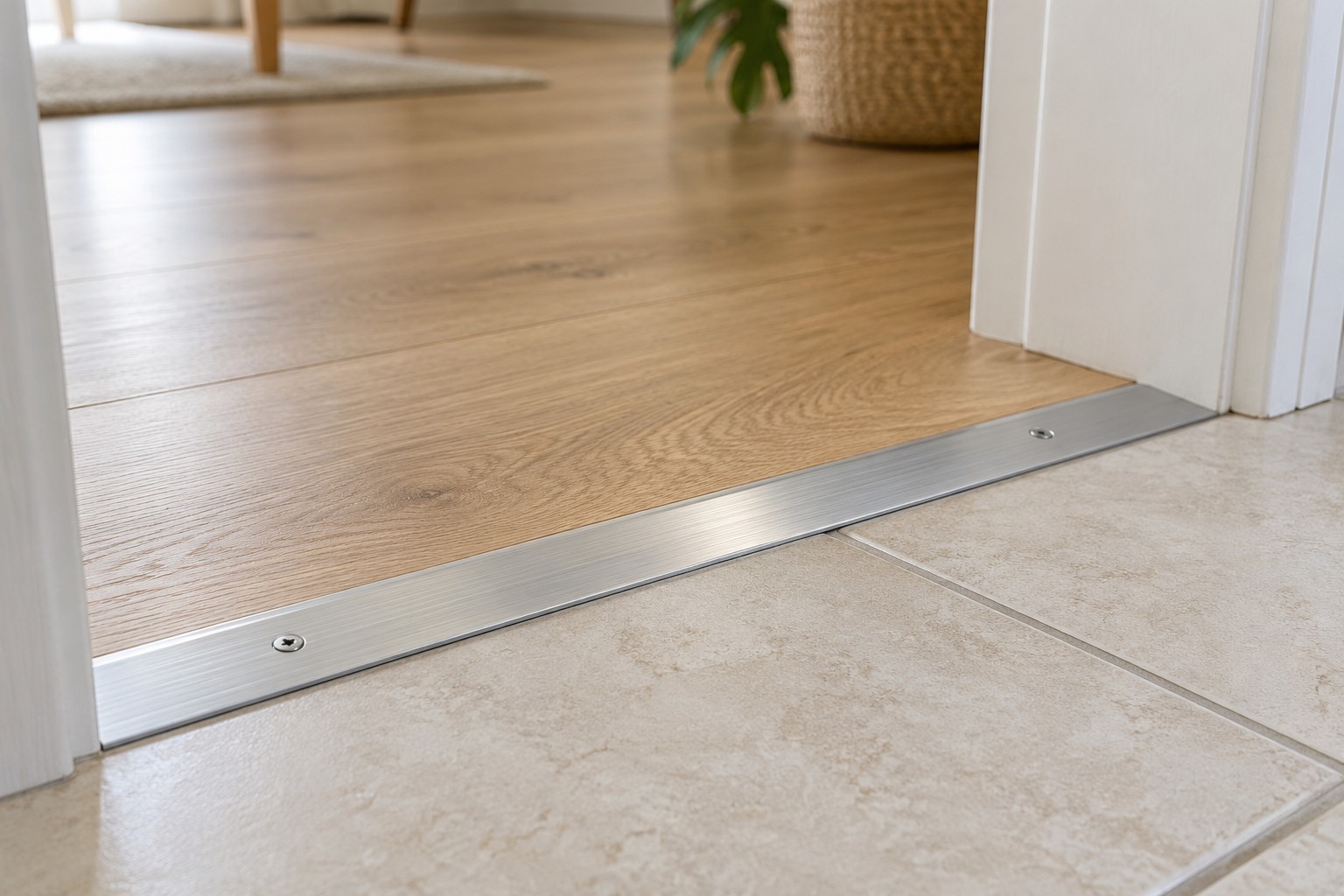
Look at both ends and along the edge where the threshold meets the flooring. Check for a lifted corner, missing cap, exposed screw or loose carpet edge. Do not kick it or repeatedly stand on it to demonstrate the movement. Photograph the problem from floor level and note whether it is worsening. Keep mats and stored shoes away from the area so they do not hide a trip edge or create another obstruction.
Identify what the strip is doing
A transition strip may bridge different floor heights, cover an expansion gap or secure a flooring edge. Those functions affect the correct repair. Do not glue it down indiscriminately or drive screws through an unknown floor build-up. Some strips clip into a concealed base, while others use a specific fixing system. Check any flooring installation information available and distinguish a loose cover from damaged material beneath it.
Make the route safer while arranging repair
If the edge is hazardous, keep people away from that route where practical and report it promptly in a rented or shared property. A temporary covering must not become an additional trip hazard or block a door, so avoiding the route is often better than improvising with tape. Ask for a compatible repair that preserves required floor movement and clearance. Once fixed, check the door swing and the transition under normal walking conditions without deliberately loading the edge.
Before you call it done
- Photograph lifted ends and exposed fixings.
- Keep the threshold visible and the route clear.
- Identify the flooring system before proposing a repair.
Know the limit. Do not drill into an unknown floor or interfere with fire-door thresholds and required clearances.