Wait for a safe working surface
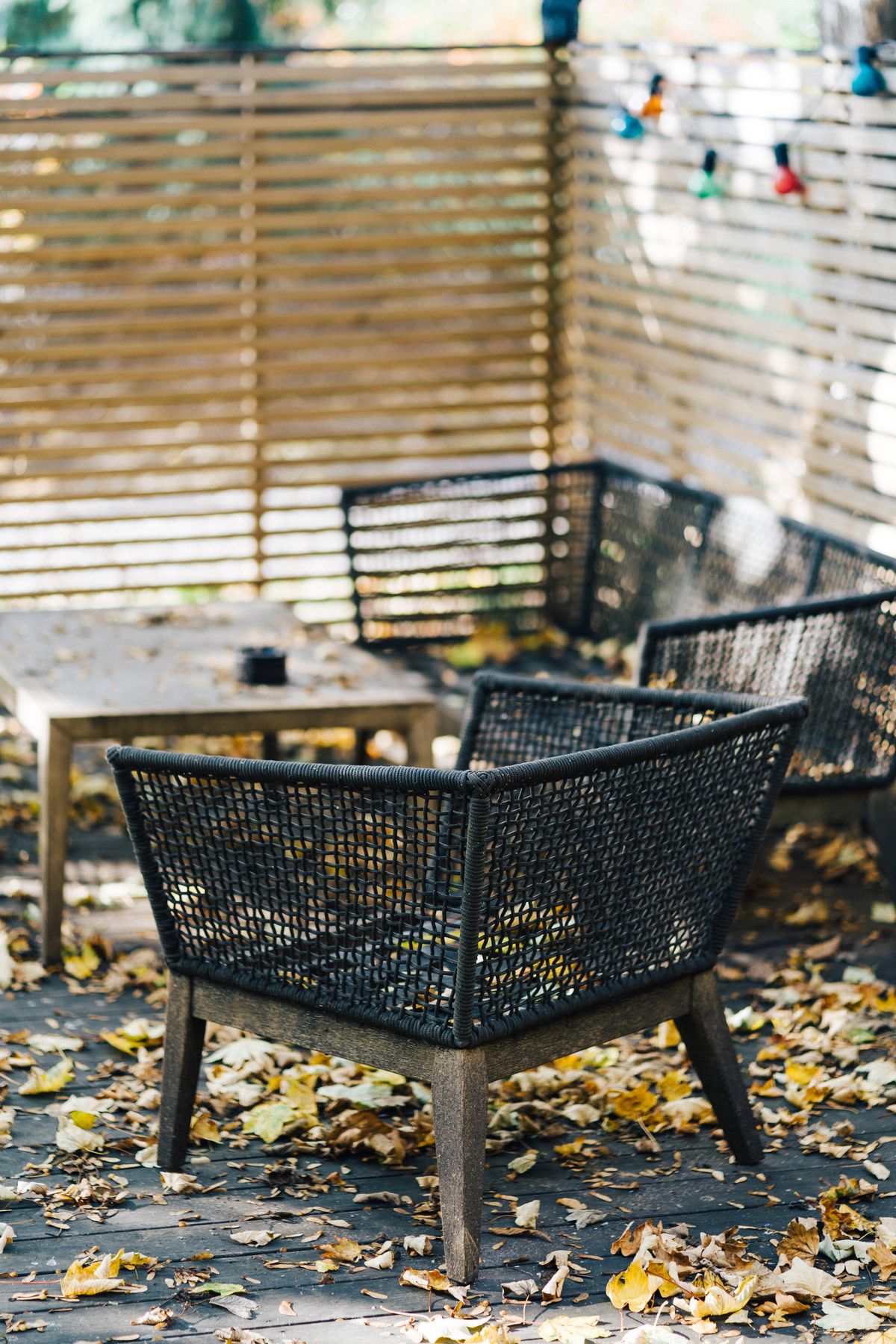
Choose a time when you can see the paving clearly and work without rain, ice or poor light. Wear suitable footwear and start from a stable, clear patch. Do not step onto a visibly slippery area simply to reach the leaves at the far end.
Move lightweight objects out of the route, but leave heavy planters and unstable furniture for another task. Check the sweepings for sharp litter before handling them. Use suitable gloves or a litter picker for debris rather than gathering an unknown pile with bare hands.
Sweep in small sections
Use a brush suitable for the paving finish. Pull leaves into a manageable pile rather than pushing them into joints, a drain or a neighbour's area. Very wet leaves may need to be lifted gradually into a container rather than dragged across the whole patio.
Keep drainage channels clear of loose debris without removing covers or reaching into hidden spaces. Bag or collect the leaves according to your local waste arrangements. If composting suitable garden material, keep unrelated litter out of that collection.
Look at the exposed paving
After clearing, check for loose slabs, standing water or persistent slippery growth. These need a separate assessment; hard scrubbing or pressure washing is not automatically suitable for every surface. Notice where leaves collect most often and clear that spot before the next wet layer builds up.
Before you call it done
- The route can be crossed securely.
- Leaves have not been pushed into drains.
- Loose or damaged paving has been noted.
Know the limit. Do not work on icy or unstable paving. Persistent drainage or movement problems need appropriate assessment, not simply a stronger cleaning product.