Observe without forcing the joint
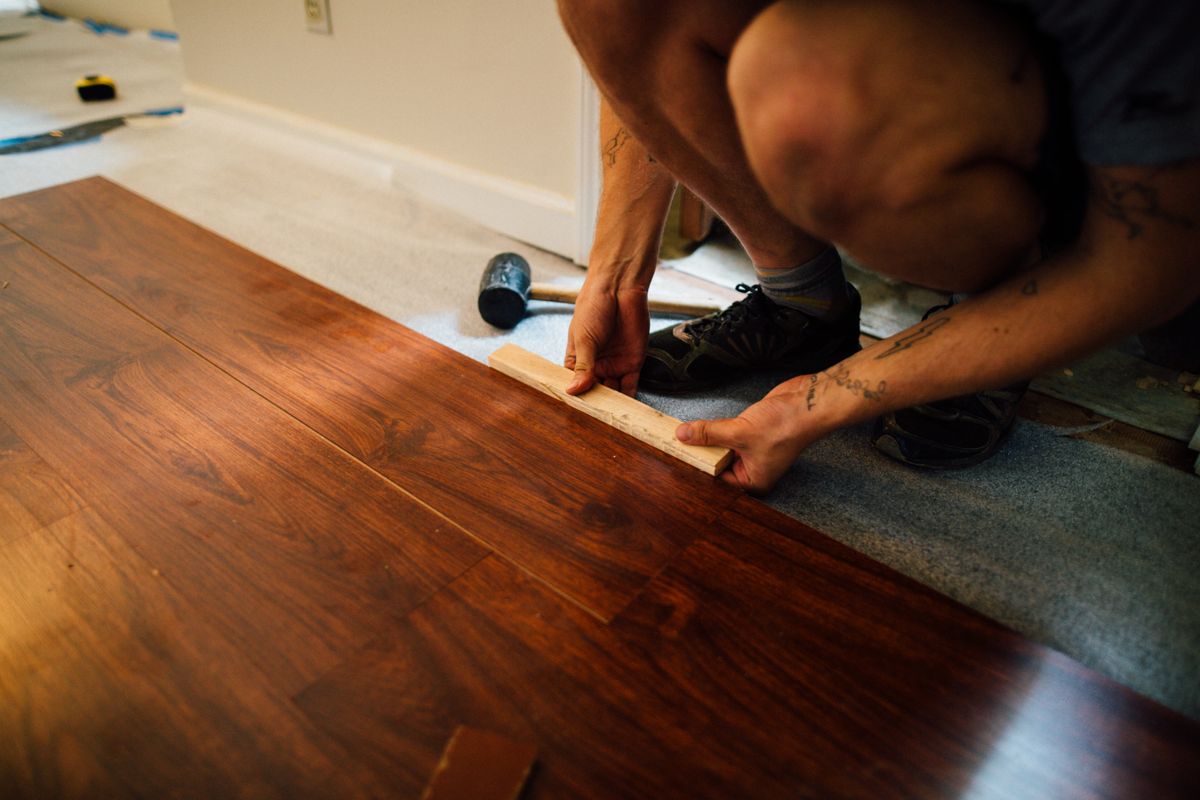
Look along the floor in good light and photograph the affected edge from several angles. Note whether it is a single swollen corner, a line across several boards or a wider area rising together. Record recent spills and whether the problem changes with room conditions. Do not bounce on the boards to test them. A visibly moving floor should not be hidden under a heavy item or a mat that makes the raised edge harder to see.
Keep further moisture away
Wipe accidental surface spills promptly using the floor maker's approved method and dry the area. Avoid wet mopping, steam or improvised heat treatments while investigating the damage. Check nearby accessible surroundings for obvious moisture, such as a wet planter base, without opening plumbing or dismantling appliances. A protective tray beneath a plant may prevent a new spill, but it will not reverse a board that has already swollen.
Report the pattern, not a guessed cause
Send dated photographs and the flooring product details to the installer, supplier or landlord. Mention whether doors have begun to catch and whether the area feels unstable. The required repair may involve the damaged board, the expansion arrangement or a moisture source, so a surface adhesive is not a reliable universal fix. Keep the affected route clear and consider avoiding it if the edge presents a trip risk. Ask for the underlying issue to be assessed before any cosmetic replacement is planned.
Before you call it done
- Record whether one board or several are affected.
- Keep the surface dry without applying heat.
- Share dated photographs with the responsible person.
Know the limit. Do not cut, screw down or glue an unknown floating-floor system as an improvised repair.