Look at a dry surface first
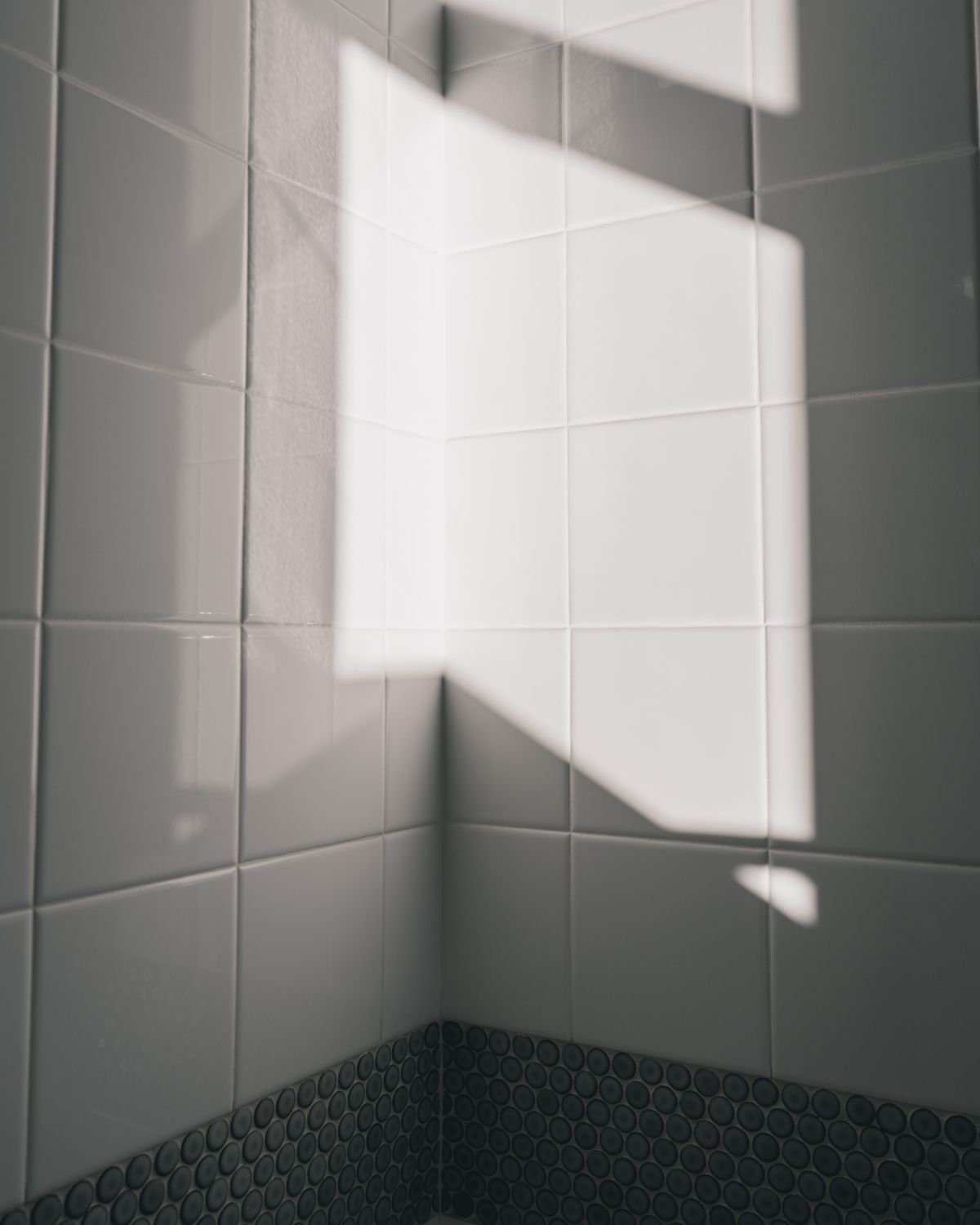
Examine the tiled area when it has dried after normal use. Good light makes hairline cracks, missing patches and colour changes easier to see. Start with corners, edges and areas exposed to frequent splashes, then compare them with a less-used section. Photograph anything new with a nearby reference point so the same place is easy to find later. A dark joint may be dirty, damp or stained; appearance alone does not establish the cause.
Distinguish grout from flexible joints
The joint between tiles is often grout, while changes of plane and fittings may use flexible sealant. They perform different jobs and should not simply be covered with the same product. Look for gaps, loose tiles, swelling of adjacent materials or persistent wetness. Avoid pressing hard on a suspect tile or probing behind it. Cosmetic cleaning and a surface patch cannot establish whether water has already reached the substrate beneath the finish.
Keep a short change record
Mark the location on a photograph, note when you saw it and inspect it again after the area has been dry. Report expanding cracks, moving tiles or repeated damp to a suitable professional or landlord. If a small cosmetic repair is appropriate, identify the existing material and its compatible repair system first. Do not grout over a flexible movement joint. Continue using extraction and normal care as intended, without treating a freshly noticed defect as proof that the whole bathroom needs replacing.
Before you call it done
- Inspect when the surface is dry.
- Record cracks rather than scraping them open.
- Check nearby surfaces for swelling or persistent damp.
Know the limit. Stop using an affected wet area if water is escaping; seek advice rather than hiding a suspected leak.