Separate metric and imperial keys
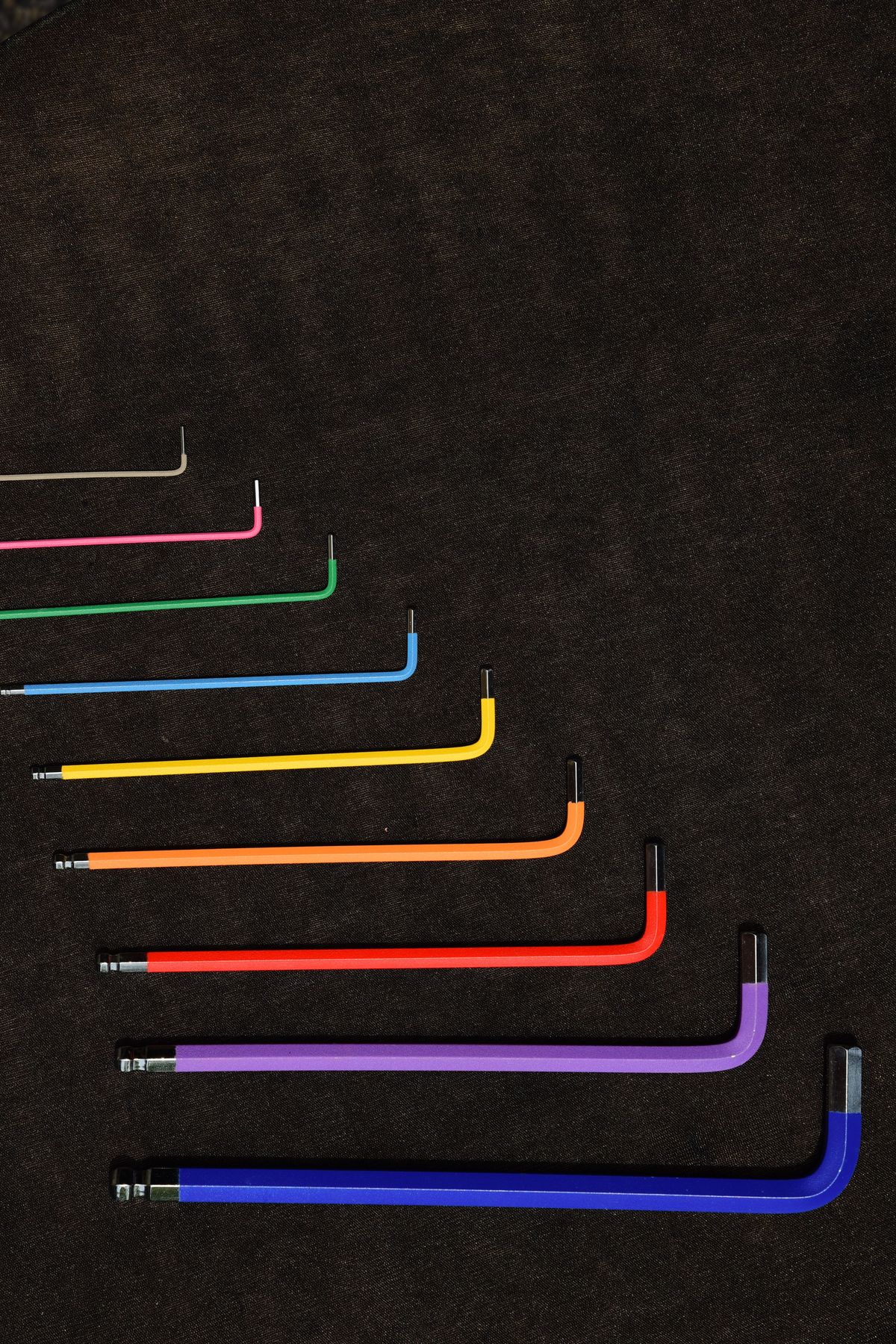
Two keys from different measuring systems can be close enough to enter a bolt without being close enough to turn it safely. Start with the size specified by the furniture maker. If that information is missing, compare clean keys gently, looking for a snug fit across the flats. Do not hammer a larger key into the recess. Remove only loose surface debris that prevents seating, without digging into the metal or finish.
Use the straight end for controlled tightening
A ball-ended key can help approach some bolts at an angle, but its contact and permitted torque differ from a straight end. Follow the tool maker's limitations. For final hand tightening of an ordinary accessible furniture bolt, a fully seated straight end offers a clearer feel. Keep the key square and hold the furniture steady. Avoid extensions, pliers on the key or any attempt to gain extra leverage beyond the assembly instructions.
Work through the assembly in order
Flat-pack instructions often require several bolts to remain loose until the parts are aligned. Tightening the first bolt completely can pull the next holes out of position. Start each bolt by hand, check the joint, then follow the specified sequence. If a bolt is stiff from its first turn, back out and check alignment rather than forcing it. Store the correct key with the furniture instructions so a future adjustment does not become a search through nearly matching sizes.
Before you call it done
- Confirm the measuring system and exact size.
- Seat the key to its full working depth.
- Follow the furniture tightening sequence.
Know the limit. Do not use this approach on safety-critical bicycle, vehicle or structural fasteners. Those may require specified torque values and a different inspection procedure.