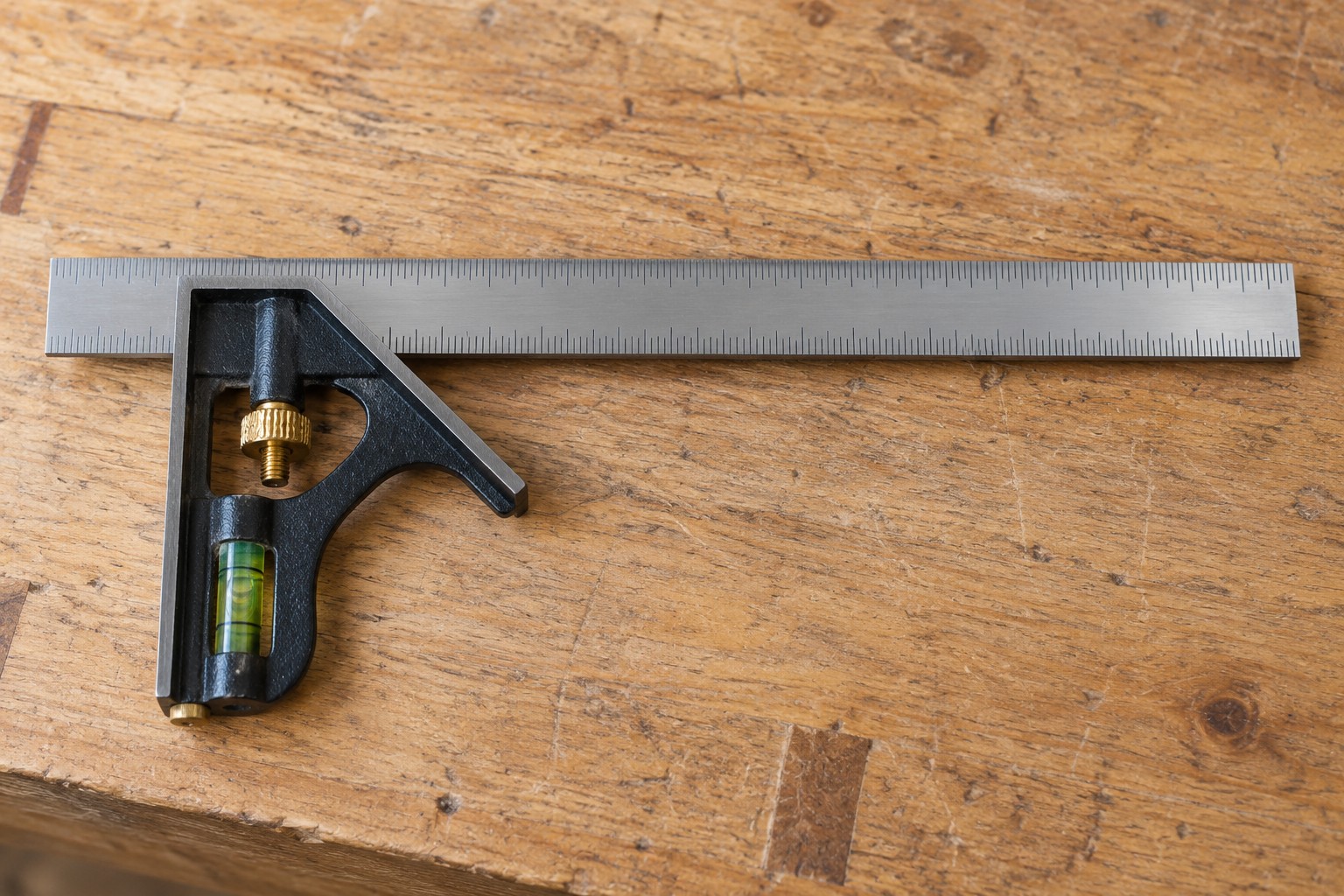
Identify the reference face
The sliding head normally provides a square reference and may also provide an angled face. Use the correct face for the mark you intend to make. Clean the ruler and the head's contact surfaces, then check that the locking mechanism holds without wobble. The timber edge you place it against must be reasonably straight. Referencing a chipped or rounded corner can make a neat pencil line that is still in the wrong place.
Check square before marking a batch
On a straight-edged scrap board, draw a light line using the square. Flip the tool to reference the same edge from the other side and compare another line at the same position. A visible divergence suggests the tool or reference edge needs attention. This is a useful practical check, not a precision calibration certificate. For tasks requiring close engineering tolerances, use suitable calibrated equipment rather than a general household square.
Use the sliding rule for consistency
To repeat an offset, set the required distance once, lock the head and test the first mark against a separate measurement. Keep the pencil at a consistent angle and use a fine point. When transferring several marks, label the reference edge so you do not accidentally measure one piece from the opposite side. Store the tool where the ruler cannot be bent and avoid dropping it into a loose pile of heavy metal tools.
Before you call it done
- Use a straight, clean reference edge.
- Check the first line before repeating it.
- Lock the head and label your reference.
Know the limit. This is a layout guide for small, low-risk projects, not an instruction to cut material. Cutting tools and powered machinery require their own training and safety arrangements.