Check why the door sounds different
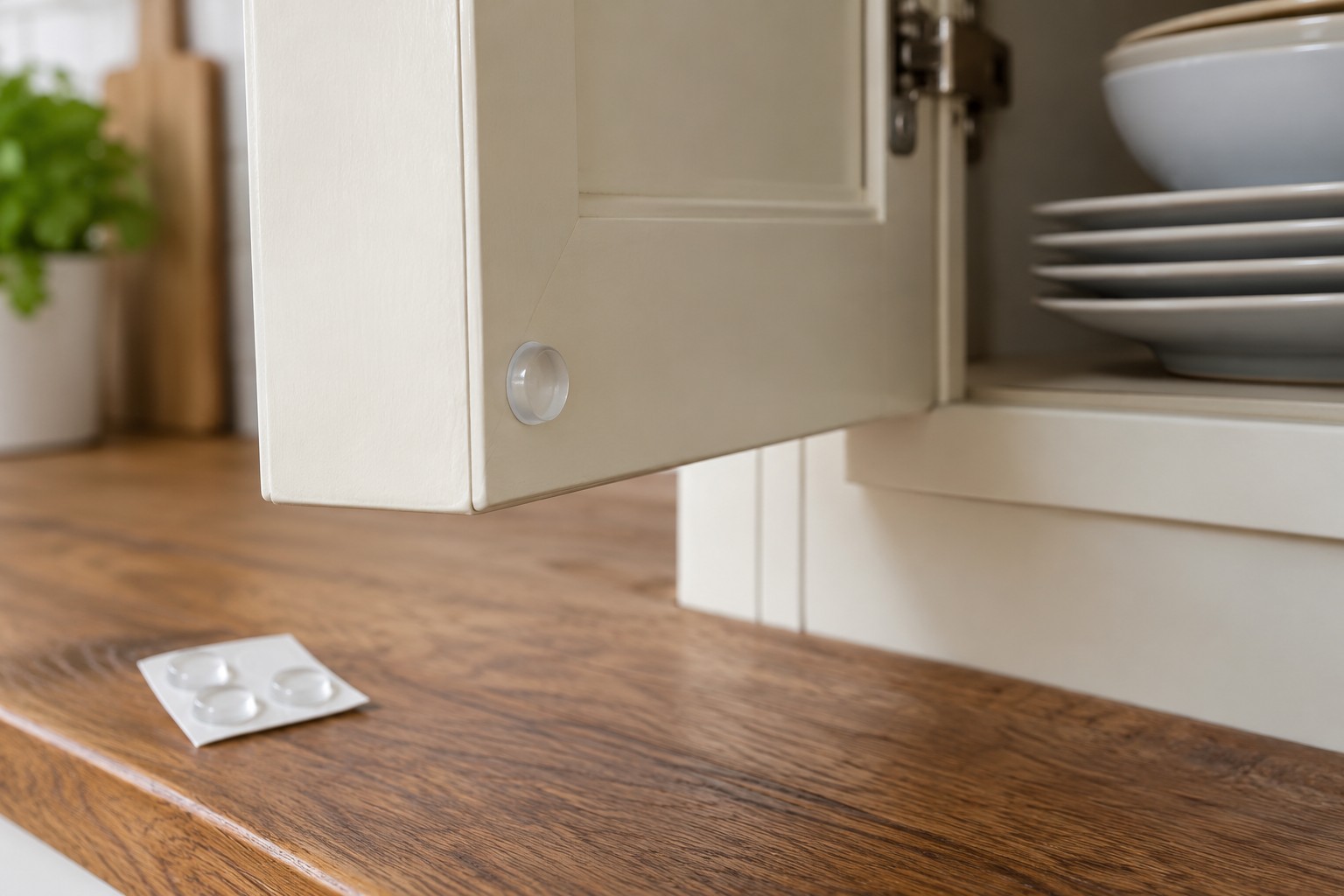
Open and close the cupboard gently and look for missing, hardened or displaced pads on the contact points. Compare with a similar door nearby, while remembering that different hinges may have different closing systems. Check for a loose object inside that might be making the noise. A door that is badly aligned or slams despite an intact soft-close mechanism may need adjustment or repair rather than extra bumper material.
Prepare and place a compatible pad
Choose the size and thickness recommended for the cabinet or a suitable equivalent that does not interfere with closure. Remove a loose old pad gently and clean the contact area using a method compatible with the finish. Let it dry thoroughly before applying adhesive. Keep the pad away from hinge movement and place it where the door normally meets the frame. Do not stack pads to compensate for a large uneven gap.
Check closure from more than one angle
Close the door slowly and inspect the top and bottom edges. It should remain aligned and fully closed without springing back. Allow any specified adhesive bonding time before repeated use. After a few days, check that the pad has not migrated or picked up grit that could scratch the opposite surface. Keep spare pads labelled with their dimensions so a future replacement is easy to match. If the door still knocks, revisit the hinge and alignment rather than covering every edge with adhesive dots.
Before you call it done
- Compare the missing pad with an intact neighbour.
- Apply only to a clean, dry, compatible finish.
- Check that the door closes fully afterwards.
Know the limit. Loose hinges and damaged soft-close mechanisms need their own assessment; bumper pads do not repair them.