Check what kind of glass you have
Ordinary window glass, treated shower panels, mirror backs and coated glazing can have different care requirements. Read any available guidance before choosing a cleaner. Remove loose surface dust gently so it does not become a muddy film. Work when the pane is not hot from direct sun, which can make liquid dry before it is removed. Protect nearby timber, painted frames and fabric from drips.
Use less liquid and a clear pattern
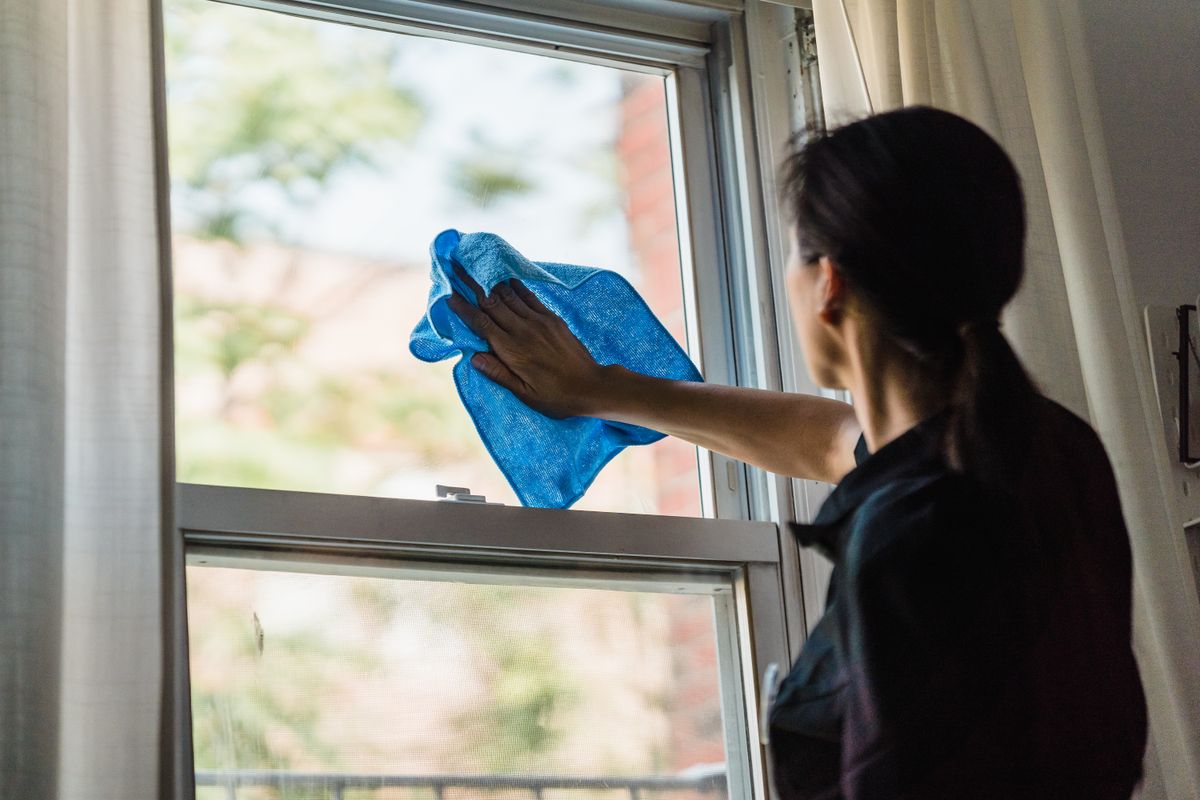
Apply a compatible cleaner as its label directs, keeping moisture away from vulnerable edges and seals. With a clean soft cloth, work across the pane in an orderly pattern rather than repeatedly circling one spot. If using a squeegee suitable for the surface, keep its blade clean and wipe collected moisture without dragging grit back across the glass. A heavily loaded cloth tends to redistribute dirt, so change it before that happens.
Find the remaining marks in angled light
Use a separate clean, dry finishing cloth where the glass care instructions permit it. Look from an angle to distinguish a residue streak from a mark on the other side. Do not attack a stubborn deposit with a metal scraper or abrasive pad on unknown glazing. Check the frame and sill for moisture before finishing. Wash the cleaning cloths so the next session does not start with the same dried product residue that caused the original streaks.
Before you call it done
- Check for coatings or special care instructions.
- Keep cloths and squeegee edges clean.
- Dry drips from surrounding frames promptly.
Know the limit. This routine is for safely reachable indoor glass. Do not lean out of windows, climb on furniture or attempt exterior high-level cleaning.