Choose the fitting style first
Look at window handles, opening sections, vents and anything projecting into the recess. Consider whether the blind can move without catching them and whether its controls can be installed safely. Read the blind supplier's measuring guide for the chosen product. Some suppliers ask for recess dimensions and make allowances themselves; others ask for finished blind dimensions. Do not subtract an assumed clearance before you know which system applies.
Measure several positions and label them
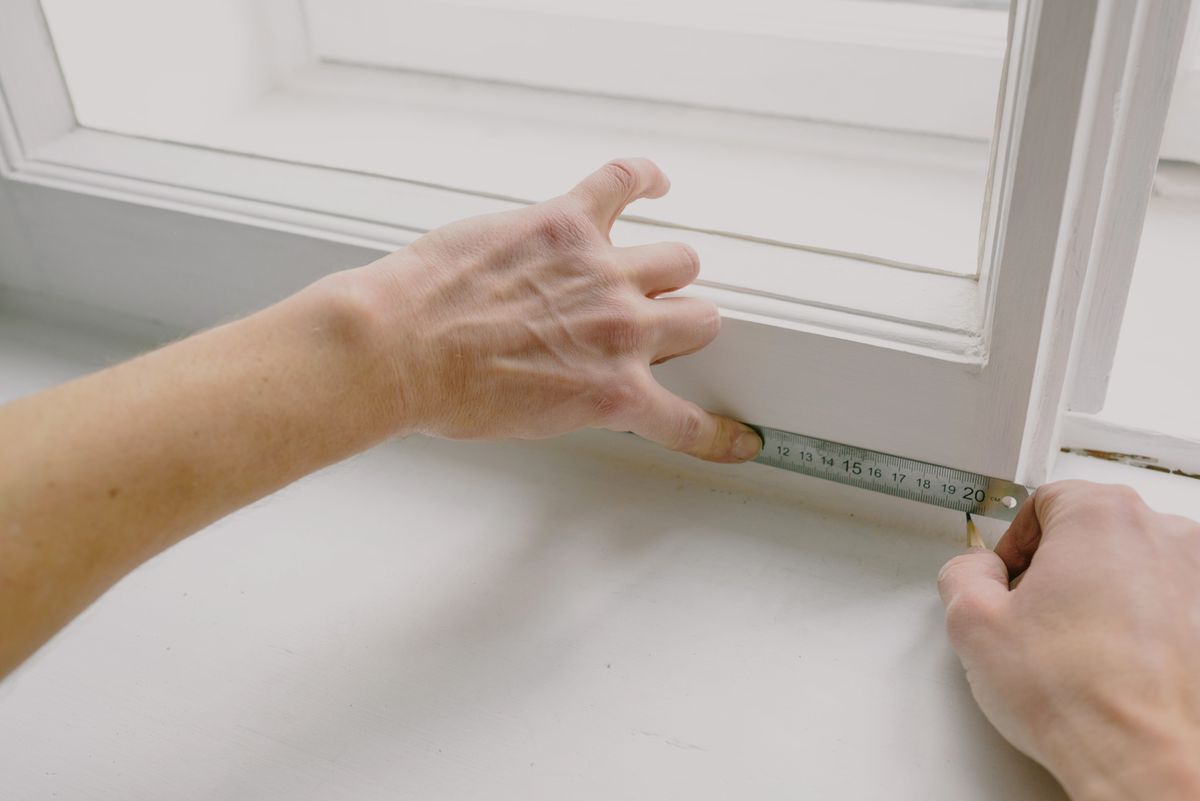
Using a suitable tape measure, record the width at the top, middle and bottom and the drop at more than one point, as requested by the supplier. Keep the tape straight rather than following an uneven plaster edge. Record each measurement with its unit and position; do not mix millimetres and centimetres in an unlabeled note. Measure the usable depth too if the product guide requires it. Ask for help when holding the tape at an awkward width.
Check the order against the room
Repeat the measurements independently and compare them before ordering. Photograph the recess and any obstruction so you can ask the supplier about unusual details. Make sure the chosen headrail and fixing arrangement suit the available depth, and obtain any landlord permission needed for installation. Measuring accurately does not establish that a wall or ceiling is safe to drill. Keep the final order dimensions separate from your raw measurements so the reasoning remains clear.
Before you call it done
- Follow the chosen blind supplier's guide.
- Label raw dimensions with positions and units.
- Check handle clearance and usable recess depth.
Know the limit. Do not lean from furniture or drill unknown surfaces; blind controls must retain their required safety arrangement.