Work with one small group
Begin with an obvious category such as heavy scarves or lightweight holiday clothes. Sort that group into items to keep in use, clean before storing and repair before the next season. Leave uncertain pieces accessible until the weather actually changes.
Check pockets and fasten loose straps before putting clothes away. Follow the care label rather than washing everything on the same setting. Store garments only when they are fully dry; a bag is not a substitute for drying or for treating an existing moisture problem.
Choose storage that suits the fabric
Fold items that stretch on hangers and avoid compressing structured pieces into a small bag. Use suitable breathable covers where the garment care guidance recommends them. Vacuum bags may suit some textiles, but they are not a universal choice for delicate or padded items.
Label the container with a useful group name, such as winter knitwear, rather than a vague season alone. Place it where you can retrieve an unexpected extra layer without moving furniture. Keep weight manageable and heavier boxes low.
Make the active rail easier to use
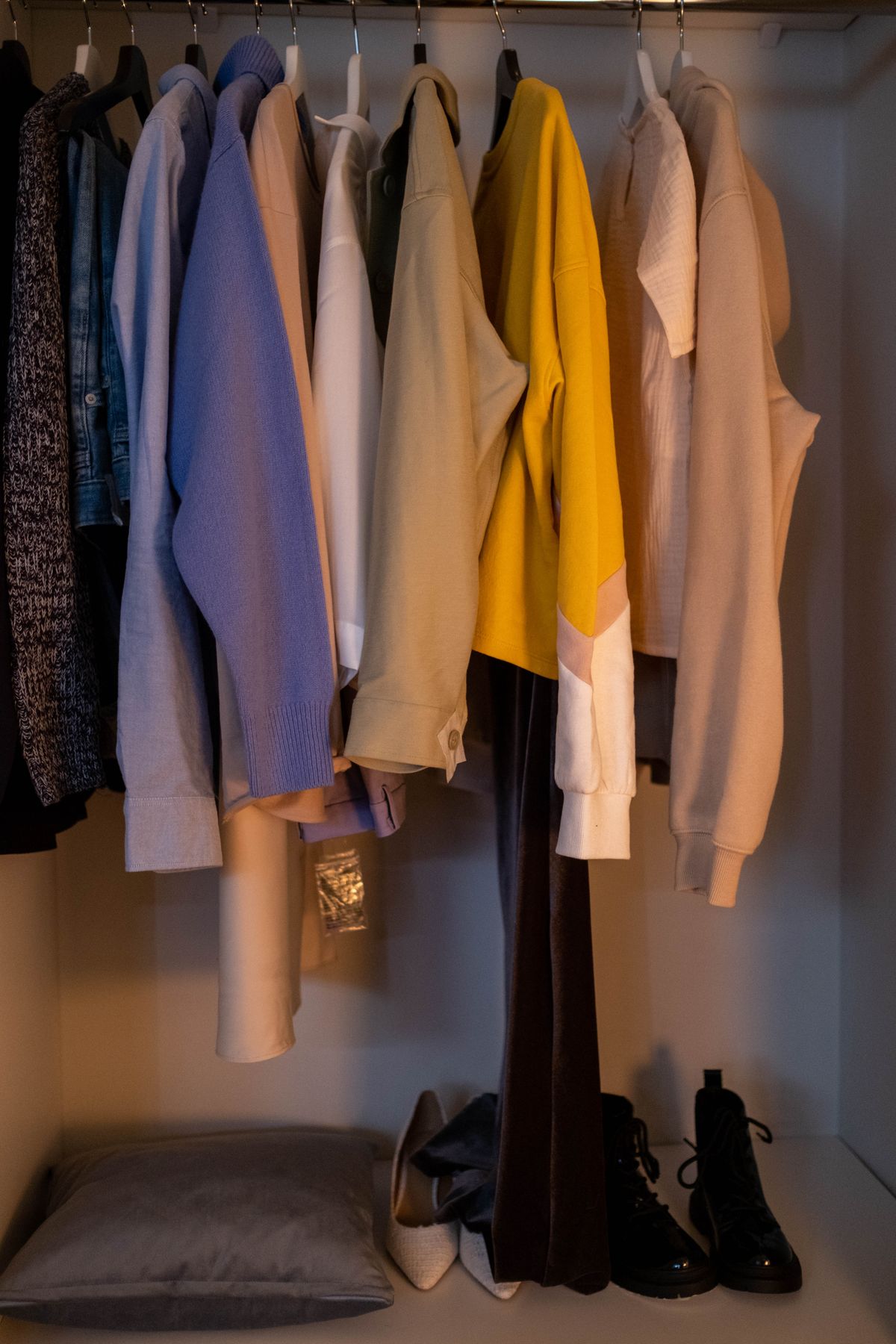
Return the clothes you expect to wear soon with enough space to move the hangers. Put outfits together only if that helps your routine; grouping by type is often simpler. Leave a small section for items waiting for repair so they do not repeatedly return to the rail as if ready to wear.
Before you call it done
- Stored clothing is clean and dry.
- The container label describes its contents.
- Frequently worn clothes remain easy to reach.
Know the limit. Do not overload a rail or add storage that interferes with the wardrobe's required wall anchoring.