Choose one scale and a clear edge
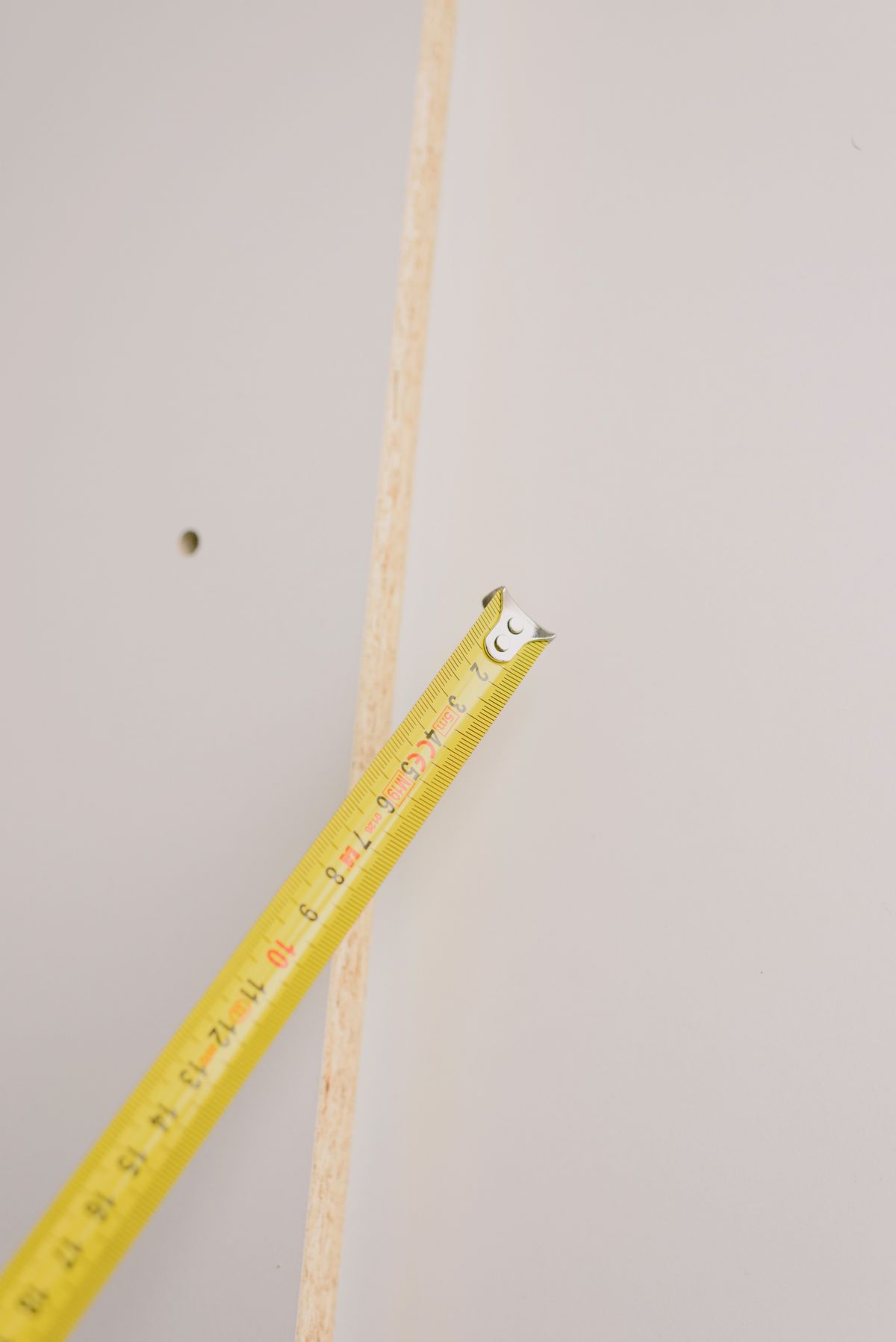
For a project drawn in millimetres, read the metric scale throughout rather than switching between inches and centimetres. Put the tape against the actual edge that matters: the cabinet opening, not an overhanging trim; the tabletop, not a soft cover. Check that the strip is straight and not twisted. A diagonal reading across a rectangular opening will be longer than its true width, even when the numbers look perfectly clear.
Understand the moving hook
The little end hook on many tapes is designed to move slightly for inside and outside measurements. That movement is not automatically a fault. Stanley explains this compensation in its TRU-ZERO hook guidance. Inspect for a bent hook, loose rivets beyond normal travel or a kink near the beginning. If the starting section is damaged, compare against an undamaged ruler before relying on the tape for a close fit.
Read, repeat and write it down
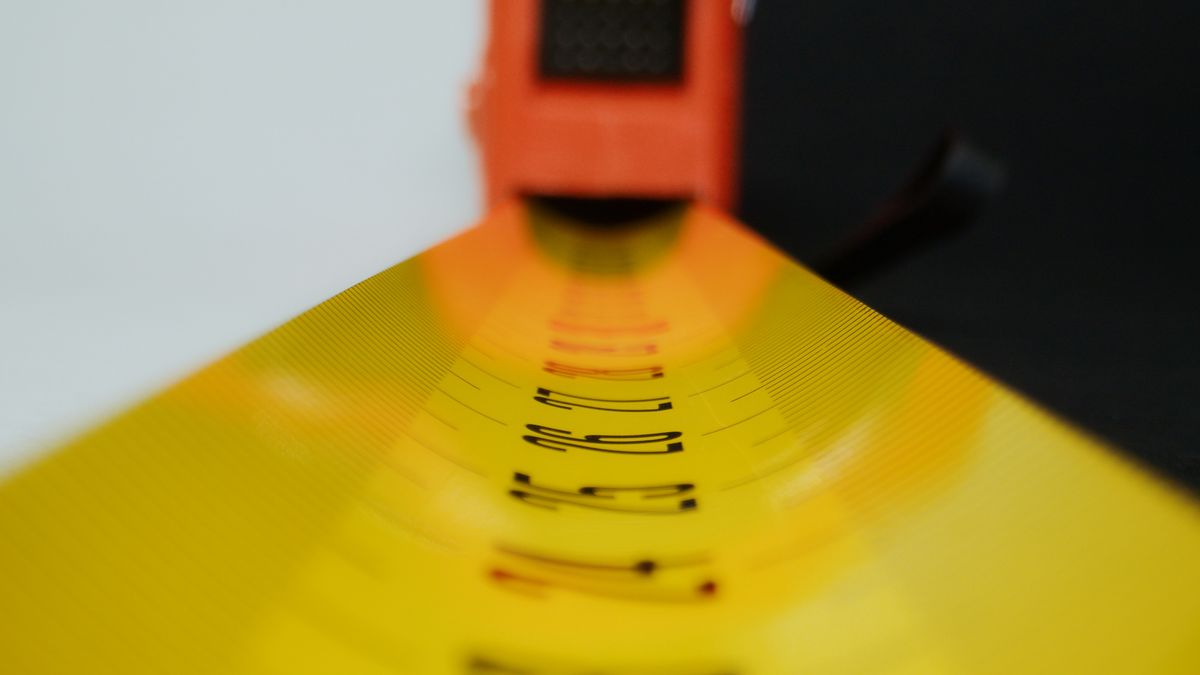
Keep your eye directly above the graduation to reduce a slanted reading. Take the same measurement a second time after releasing and repositioning the tape; repeating without moving it can repeat the same mistake. Record the dimension with its unit immediately. For a shelf opening, measure front and back because walls are not necessarily parallel. Guide the blade back gently instead of allowing the hook to snap against the case. This protects both fingers and the measuring edge.
Before you call it done
- Use one unit throughout the project.
- Repeat from a fresh tape position.
- Record where each dimension was taken.
Know the limit. Do not stretch a tape across a stairwell or climb onto furniture to reach a measurement. Use a safer measuring method or professional help for inaccessible spaces.