Choose one arrival point
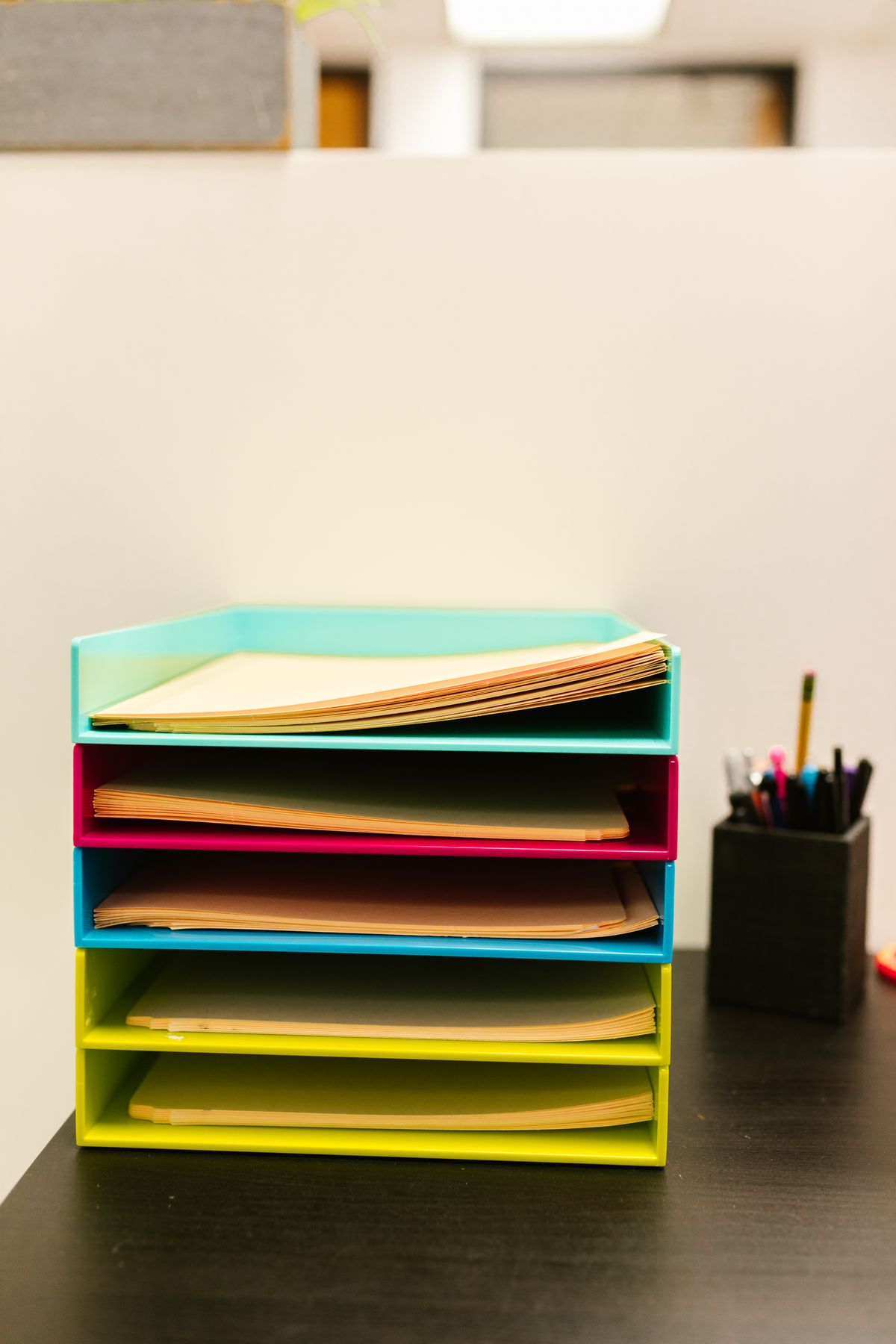
Put a shallow tray near the place where you normally open post, away from spills and public view. Include papers brought home in bags so they do not create a second hidden pile. Keep passports, important originals and sensitive documents in appropriate secure storage instead.
Remove envelopes and unrelated packaging once you have checked the contents. Avoid leaving a letter buried inside its envelope where the action or date is hard to see. Handle personal details carefully when disposing of paperwork.
Make the next action visible
When you review the tray, decide whether each paper needs an action, filing or disposal. Keep a simple note of any task and its relevant date in the system you actually use. Do not rely on the thickness of a paper pile to remind you that something is urgent.
File reference documents by a few recognisable subjects rather than creating a separate folder for every letter. Keep related pages together and label a folder with words another household member would understand.
Set a limit the tray can enforce
Choose a brief, regular time to clear decisions from the tray. If it is full, review it before adding another tray. Some documents have specific retention or legal importance; check the appropriate issuer or professional advice before discarding originals, rather than applying a single keep-or-bin rule to everything.
Before you call it done
- Incoming papers arrive in one place.
- Actions are recorded outside the pile.
- Sensitive and important originals are stored securely.
Know the limit. This is an organisation method, not guidance on legal document retention. Confirm requirements before destroying important records.