Check the pairs on a clear surface
Start with clean, dry containers and match every lid before putting anything back. Check the manufacturer's markings for intended uses rather than assuming all plastic boxes are suitable for freezing, microwaving or dishwashing. Set aside cracked, distorted or damaged pieces.
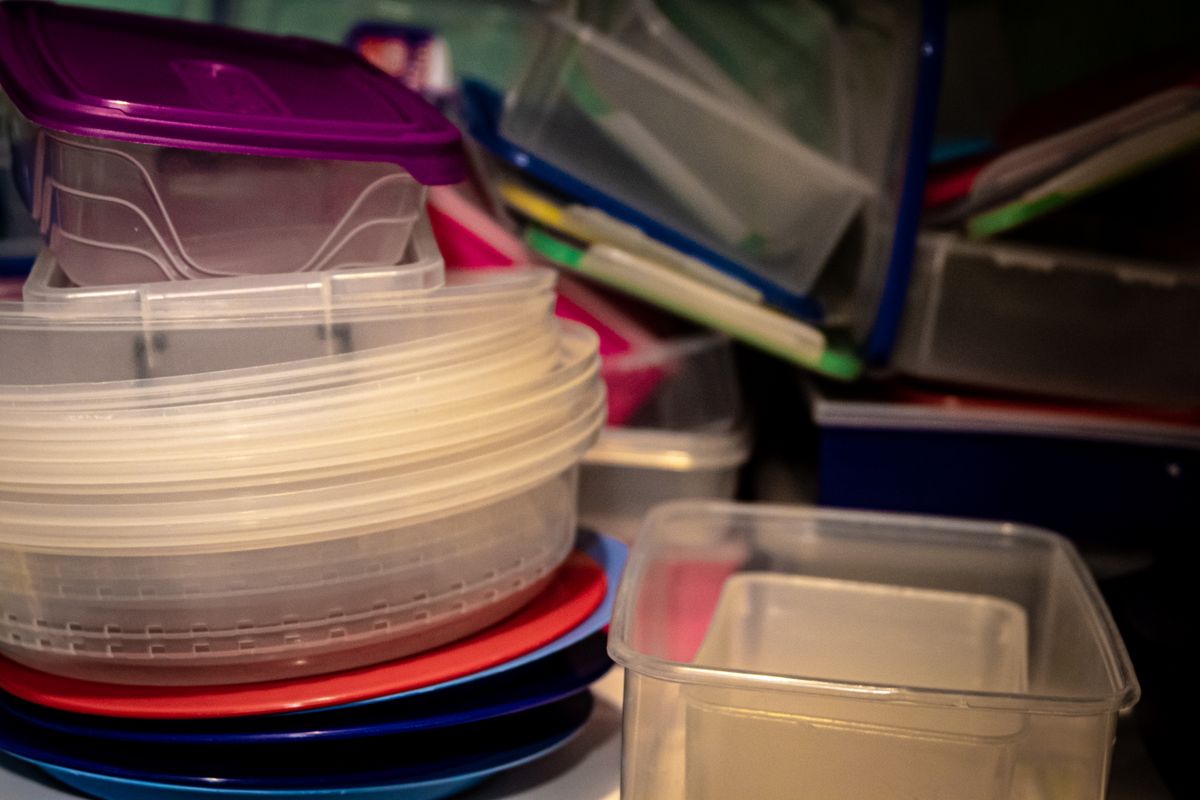
Keep a small group of genuinely useful sizes. If a container has no matching lid, decide whether it has a specific open-storage job; otherwise it is likely to return to the pile without solving anything. Avoid mixing food storage with containers previously used for non-food substances.
Choose a system you can undo easily
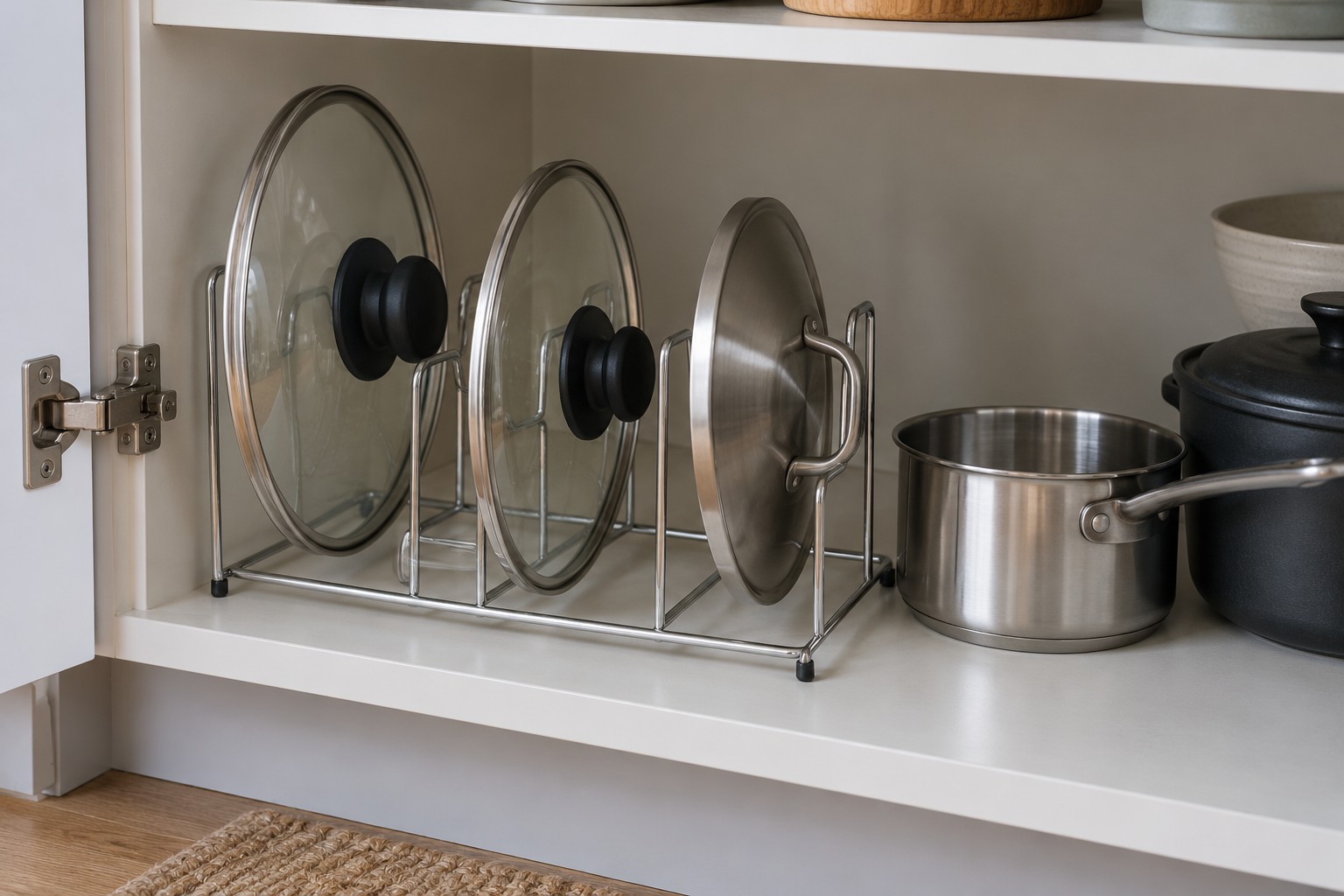
Nest compatible empty bases loosely, with the largest beneath the smaller ones. Stop before the stack becomes awkward to lift. Store lids upright in a shallow box or a suitable divider so their shapes are visible rather than hidden in a tall horizontal pile.
If you use only a few containers, storing each with its lid may work better. Make sure everything is completely dry before closing it. Test opening the cupboard and taking out the size you use most often with one hand free.
Avoid building a second overflow pile
Give the collection a fixed section of the cupboard. When a new container arrives, check whether it replaces a damaged or inconvenient one. Keep lunch boxes with their own inserts so the morning routine does not involve searching across several drawers.
Before you call it done
- Every everyday container has its matching lid.
- The bases are dry and loosely nested.
- Use markings are readable on the containers.
Know the limit. Discard or repurpose damaged food containers only as appropriate to their material and local guidance; tidy storage cannot restore food-contact suitability.